John Barkley
-
 All Things, 202548 x 60 in.
 -
All Things Passionate, 202533 x 33 in.
-
Always Moving, 202148 x 72 in.
-
Always There, 202440 x 60 in.
-
Anima Mundi, 202660 x 72 in.
-
Awakened #2, 202672 x 48 in.
-
Back and Forth, 202020 x 20 in.
-
Colour Emerges #7, 202530 x 36 in.
-
Cosmic Entry, 202254 x 84 in.
-
Cosmic Garden Seed, 202048 x 60 in.
-
Cosmic Shift , 202348 x 60 in.
-
Drawn #2, 202116 x 20 in.
-
Elixir, 202216 x 20 in.
-
Emerging And Receding #3, 202248 x 72 in.
-
Emerging From Within #2, 202020 x 20 in.
-
Enchanted Cascade, 202272 x 60 in.
-
Existing Within, 202348 x 48 in.
-
Felt #2, 202016 x 20 in.
-
Fire, Water, and Light #4, 201872 x 48 in.
-
From The Void, 202148 x 72 in.
-
Immersed, 202440 x 60 in.
-
In Its Becoming, 202436 x 48
-
In The Breath, 202440 x 60 in.
-
Interior Terrain, 200940 x 48 in.
-
Memory Traces, 202020 x 20 in.
-
Meridians, 202516 x 20 in.
-
Moments After, 202160 x 72 in.
-
New Links, 202420 x 40 in.
-
Once Again, 202236 x 30 in.
-
Parading Colours, 202516 x 20 in.
-
Prana Push, 202140 x 48 in.
-
Quarternary Return #3, 202540 x 48 in.
-
Rapture #3, 201916 x 20 in.
-
Realms, 202216 x 20 in.
-
Red and Green Stream of Mind, 201948 x 60 in.
-
Released, 201916 x 20 in.
-
Rhapsody Reflection 3, 202140 x 60 in.
-
Rhapsody Reflections #2, 202054 x 84 in.
-
Risen #2, 202030 x 30 in.
-
Spark Within, 202020 x 24 in.
-
Still Yearning, 202440 x 60 in.
-
That Which Awakens, 202154 x 84 in.
-
The Fire Within, 202020 x 20 in.
-
Tinctures in Expanse, 202236 x 30 in.
-
Towards an Embrace, 202148 x 72 in.
-
Traces in Space, 202236 x 30 in.
-
VHPD #3, 200940 x 48 in.
-
VHPD #6, 200940 x 48 in.
-
Within and Beyond, 202260 x 48 in.
-
Within The Realms, 202248 x 72 in.
-
Vista Breeze, 202320 x 20 in.
-
Venture In, 2024-202524 x 24 in.
-
Variations, 202548 x 72 in.
-
Trail Vista #1 & #2, 202420 x 32 in.
-
The Painter's Path #14, 202172 x 60 in.
-
The Invitation, 201248 x 60 in.
-
Spring Fresh, 202020 x 24 in.
-
Rugged River, 202620 x 40 1/4 in.
-
Rugged Inlet #2 , 202548 x 60 in.
-
Rugged Inlet, 202430 x 36 in.
-
River Porthole, 202430 x 30 in.
-
Pathway In #7 , 202572 x 60 in.
-
Park Terrain, 202316 x 20 in.
-
Meech Creek Colours, 202136 x 36 in.
-
Lighted Pathway In, 202660 x 72 in.
-
Inside, 202220 x 20 in.
-
In Between, 202124 x 24 in.
-
Gentle Autumn Breeze, 202630 x 36 in.
-
Gatineau Turn 2, 202220 x 20 in.
-
Creek to River, 202216 x 20 in.
-
Coloured Inlet, 2022-202416 x 20 in.
-
Coloured Entrance, 202220 x 20 in.
-
Blue Path In, 201248 x 60 in.
-
Another View, 201830 x 60 in.
-
Always Turning #2, 202420 x 36 in.
-
Almost There, 201572 x 60 in.











-
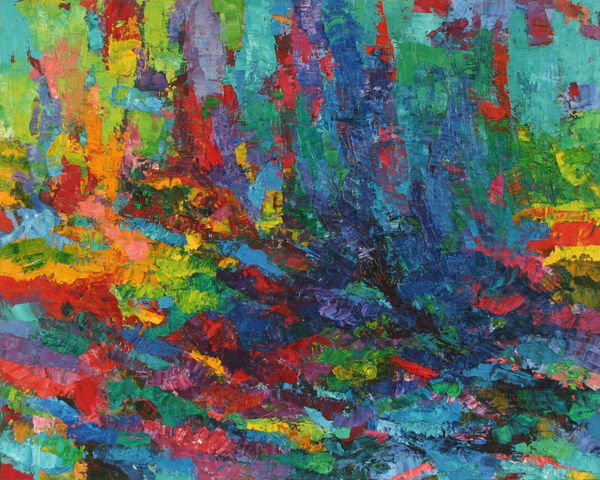
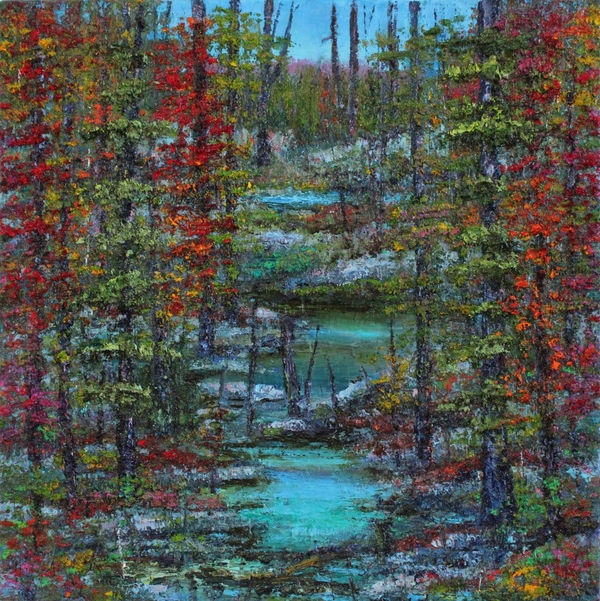
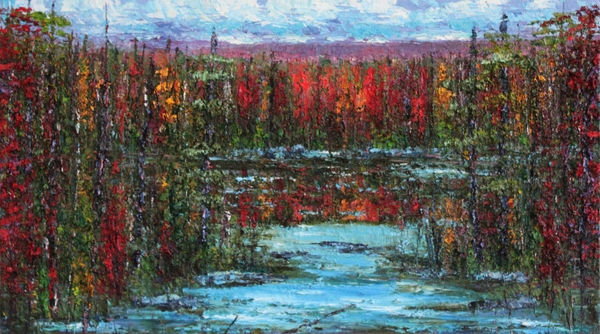
 Quarternary Return #3, 2025
-
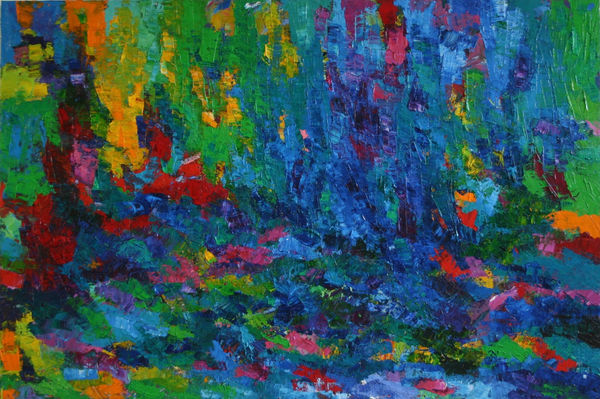
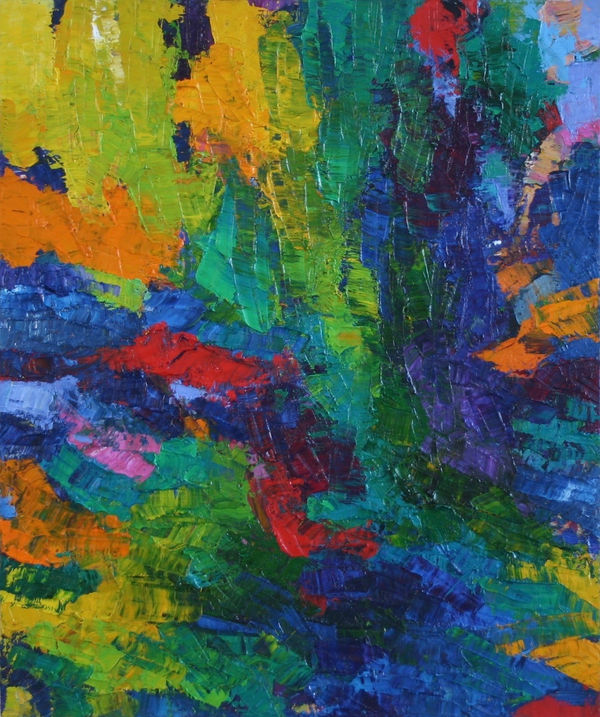
 Still Yearning, 2024
-
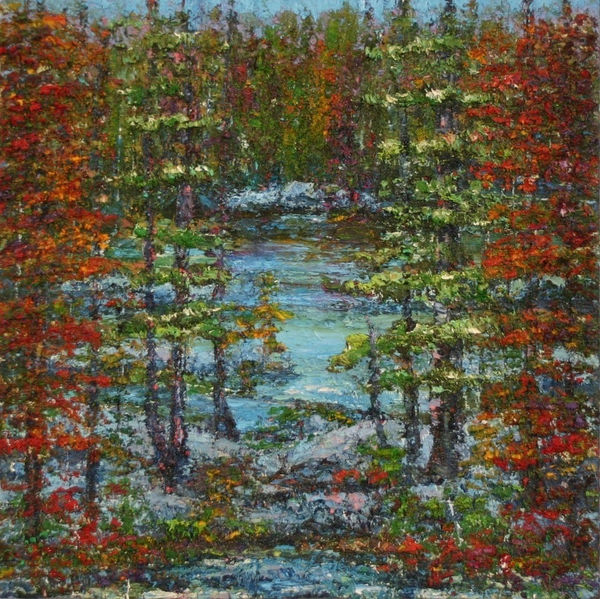
 Trail Vista #1 & #2, 2024
"My environmental concerns, existential questions, and my academic interests influence the starting point. In the work, I contemplate questions pertaining to ultimate meaning, life and issues of personal control."
I am an experimental painter. I have been working on my craft since 1996. I start work with a conceptual point of entry and then work intuitively, in dialogue with the work. The art making process largely determines the completion of the piece, and one work often then leads to another. My experience within the studio is a catalyst for my departure from a mode of modern secular monophasic consciousness into an experience of interconnected consciousness with nature and all living things. My environmental concerns, existential questions, and my academic interests influence the starting point. In the work, I contemplate questions pertaining to ultimate meaning, life and issues of personal control.
In 2000, I wrote a Masters thesis which created a new hermeneutic of art based upon the work of Jung, Tillich, and Hiedegger, it was subsequently applied to the work of Roland Poulin. The thesis included significant discussion about the relationship between art, cosmogony, and the human psyche. In my research I have studied philosophers and theologians that challenge conventional wisdom and advocate the adoption of a new mythology. I have been developing a visual vocabulary to explore this idea.
My work is influenced by and linked to many Quebec artists. My painting application has recently been compared, by one critic, to Riopelle and Borduas, and the contrast between the organic and geometric to Charles Gagnon. I have been influenced by Poulin’s use of opposites to create tension, and his use of dark void forms. In my work I examine consciousness by using abstraction and a symbolic vocabulary. A visual vocabulary has been derived from natural elements and industry and is used as a vehicle for the examination and expression of the contemporary psyche.
– John Barkley
-
Quarternary Return #3, 2025
-
Still Yearning, 2024
-
Trail Vista #1 & #2, 2024
John R. Barkley is a Canadian abstract painter born in Ottawa in 1964 and based in Chelsea, Quebec, with a studio in the Wakefield area. He has maintained a professional artistic practice since 1996. His father, an artist himself, took him on painting trips into the Ottawa Valley as a boy, and that first relationship to landscape has never left the work.
His canvases are dense, layered abstract paintings built from thick applications of paint and short, clustered brushstrokes. Galerie de Bellefeuille is proud to count John Barkley among the Canadian artists it represents in Montreal and Toronto.
An abstraction rooted in Canadian landscape
John Barkley's work connects to several Canadian painting traditions without collapsing into any one of them. Writers have noted the landscape influence of Tom Thomson and the Group of Seven, but also the Automatiste lineage: his paint application has been compared to Riopelle and Borduas, and his contrast between organic and geometric elements to Charles Gagnon.
A European filiation runs alongside it, that of the German Neo-expressionists and Anselm Kiefer in particular, in the treatment of surface and the use of symbol. Barkley credits his time at the University of Ottawa with Catherine Everett and Roland Poulin as the deepest influence, and takes from it an introspective approach to the studio.
The void and the structure
The vocabulary of Barkley the artist rests on a tension held from canvas to canvas. On one side, gestural abstraction, colour in fragments, a free hand. On the other, an imposed linear structure, hard edges, a geometry that constrains the field.
The dark void forms running through the work, announced in titles such as From The Void and Cosmic Entry, are not compositional accidents. They stand for the unconscious, the unknown, the initial state of Nothingness embedded in numerous creation myths and esoteric texts. Water recurs as a counterpoint, combined with that linear structure, carrying a critical narrative while serving the investigation of paint itself.
This is what allows a John Barkley painting to hold together two registers usually kept apart, painterly abstraction and hard edge abstraction, and to house both aesthetic content and cultural critique.
The scholar in the studio
Barkley is also a scholar, and his studies bear directly on his painting. He holds a Master of Arts in Religion from Carleton University (2001), a Bachelor of Fine Arts in Visual Art, Magna Cum Laude, from the University of Ottawa (1996), and both an Honours BA in Psychology and a BA in Law and Psychology from Carleton.
In 2000 he wrote a Master's thesis proposing a new hermeneutic of art built on the work of Jung, Tillich and Heidegger, then applied to the work of Roland Poulin. The thesis examined at length the relationship between art, cosmogony and the human psyche. That research explains the constancy of his concerns: ultimate meaning, death, questions of personal control, and the idea that what exists within the human psyche is interconnected with what happens in nature. He begins from a conceptual point of entry, then lets the process decide. One work leads to the next.
Collecting John Barkley
To acquire an abstract painting by John Barkley is to take on work that reads slowly, as the layers separate. His canvases range from intimate 16 x 20 inch pieces to very large works of 72 x 60 inches and beyond, and are held in private and institutional collections in Canada and abroad. Collectors drawn to historical Quebec abstraction will find a direct lineage in Marcel Barbeau's automatism.
Those for whom the relationship to nature comes first will find a neighbouring register in Robert Marchessault's tree landscapes. For work in which the painted surface becomes the subject itself, Jason Martin's painted surfaces continue the conversation.
To see the John Barkley works currently available, our team welcomes you to our spaces in Montreal and Toronto.
Career Highlights
Born in Ottawa in 1964, John R. Barkley lives in Chelsea and works from a studio in the Wakefield area of Quebec.
He has pursued a professional artistic practice since 1996.
He holds an MA in Religion (Carleton, 2001) and a BFA in Visual Art, Magna Cum Laude (University of Ottawa, 1996).
His 2000 thesis proposed a hermeneutic of art grounded in Jung, Tillich and Heidegger.
He has exhibited nationally and internationally, with work in collections around the world.
Notable Exhibitions
John Barkley, Galerie de Bellefeuille, Toronto, 2023.
The Cosmos Within, Masters Gallery, Calgary, 2022.
Imanence, Galerie St-Laurent + Hill, Ottawa, 2017.
Galerie de Bellefeuille, Montreal, 2017.
FAQ
Who is John Barkley the artist?
John R. Barkley is a Canadian abstract painter born in Ottawa in 1964 and based in Chelsea, Quebec, in professional practice since 1996. He is not to be confused with John Lewis Barkley, the American First World War soldier of the same name.
What is John Barkley's style?
A dense, layered abstraction that combines gestural brushwork with hard geometric structure. His canvases draw on Canadian landscape, cosmogony and Jungian psychology, and often use dark void forms to evoke the unconscious.
Where can I see John Barkley's work in person?
At Galerie de Bellefeuille, 1367 Greene Avenue in Montreal and 87 Avenue Road in Toronto. Write ahead so the canvases you want to see can be hung or pulled for your visit.